Monday, April 11, 2016

"Kissed by the Muse"

by Carol


A few weeks ago Leigh let us in on her practice of meditation. You can read it here if you missed it. Many of the comments mentioned finding peace through photography. Recently I came across a book review of Torsten Andreas Hoffman's new book called Photography As Meditation. OOO! Right up my proverbial alley - I ordered it on the spot!

The book (which I am really enjoying) demonstrates how much photography and meditation have in common. For instance, photography can not be hurried - it takes a quiet mind and body to (literally) focus so intently. Like meditation, it becomes a counterpoint to our hectic pace. Hoffman makes the point that photography forces you to live in the present moment. The best pictures are taken by maintaining patience - waiting for the exact moment that seagull walks into the sunbeam - to click the shutter, or studying the subtle changes in color as the sun sinks moment to moment into the horizon.
"There is almost nothing whose existence is based more on the present moment than a photograph. Photography divides moments into an elapsed time of 1/8000 of a second."
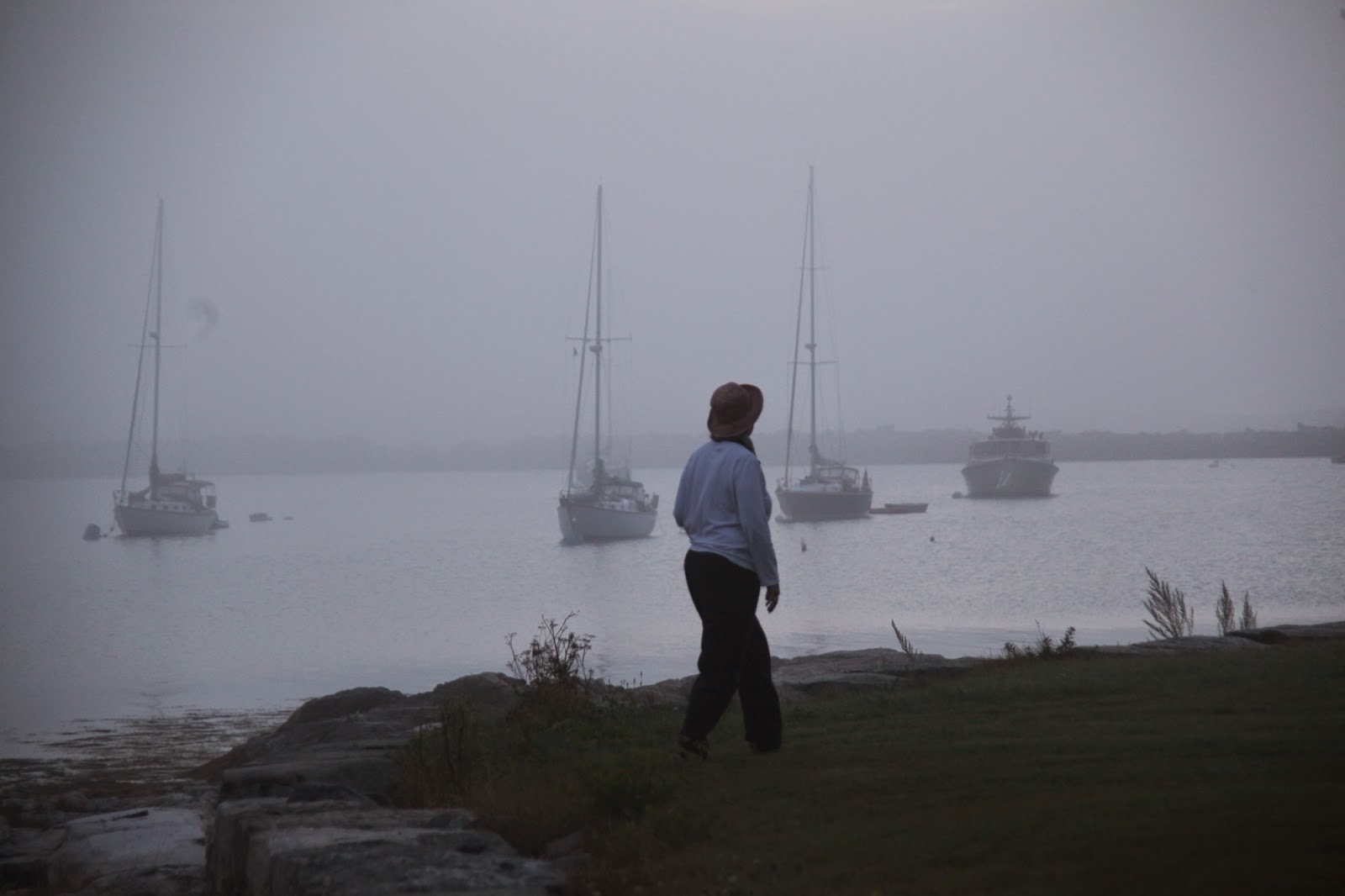
I find that my very best photographs have happened when a full peace has settled over my mind. I am relaxed but my senses are fully involved - I am feeling the warmth of the fading sun and the gentle breeze on my skin, I am smelling the briny sea, I am hearing the gulls call and splash as they dive. I am tasting the salt air. The click of my camera seems loud even though it is so much softer than the levels of noise I am exposed to in my daily life! I am alone on the planet. This is sometimes referred to as being "in the zone," but for me its like stepping outside of the world for a minute - seeing all of life around you in greater detail.


The book makes the point that many religious figures, including Jesus, went off into the desert to consider their path before acting. This stepping away to hear your own heart seems essential in this noisy world. Hoffman tells us that "with fewer stimuli to navigate, The senses are heightened and better able to recognize significance." Stepping back allows you to find a stillness, which Zen Master John Daido Loori ( who wrote The Zen of Creativity)refers to as the still point.
"Once you have reached this still point, you have arrived at the source of all inspiration and creativity. It is in this state that you might be kissed by the muse." 


Spring is here, friends. Grab your camera, find your still point away from the world, and make an image of whatever comes into your personal consciousness. I believe its focus will be more perfect, its composition will be more intriguing and its colors will be more vibrant. When an image speaks to you, it will speak to us. I hope you get a big SMOOCH! Happy chilling......


Monday, October 26, 2015

The Sound of the Sea

by Carol


Look, Stranger, on this island now
The leaping light for your delight discovers,
Stand stable here
and silent be,
That through the channels of the ear
May wander like a river
The swaying sound of the sea.

                                    W.H. Auden


Friday, March 27, 2015

Sensory Perceptions and Photography

by Dotti

As I walked out my front door the other morning to get the morning paper, 
I was greeted by a cacophony of birdsong.
It was beautiful!
As I listened, I realized that to experience the glories of spring 
was to experience sensory overload.

The same could be said of photography.

SIGHT


Obviously, the first sense that we use in photography is our sight. Makes sense since photography is a visual practice and a visual art. But there is so much more stimuli involved in our photography if we just pause to become more aware.

HEARING


All of us, I’m sure have walked through the sand dunes toward the ocean and long before we can even see the water, our ears hear the sound of the waves as they race one another to the shore. Now we’re on alert as our eyes seek to follow the sounds we’ve just heard, telling us that the shimmering ocean waters await us and the camera we hold in our hands. Our pulse quickens, perhaps our steps quicken as well.

SMELL


All of us have done some cooking and baking in our lifetimes and most, if not all of us, have at one time or another stopped to take photos of our food prep. But as we are preparing our treats, we surely smell the aromas coming from the fruit and veggies as we chop, or the cookies as they bake, or the wine before we take a sip.

There are so many other smells around us, too. Soon we’ll smell the sweet spring lilacs, the flower fragrances in the garden, the earth as we prepare the flower beds. Or the sea air as we approach the seaside. The list is endless.

TASTE


Food preparation aside, how many of our other normal everyday activities are centered around eating? A lot! When the weather warms, I take my granddaughter to get ice cream or frozen yogurt at least once every week or two for an after school snack. Out comes the iPhone and I sneak a photo as we eat our treats.

Or perhaps on a rainy day photo shoot we lift our face to the raindrops that are falling on our heads and catch some of the drops in our mouths, tasting of the wetness of the rain. Yes, taste is part of the experience as well.

TOUCH


This may be seem to be the most elusive of all but I suspect that once we stop and think about it, we’ll realize what an integral part touch plays in our photography. At the most elemental level, we have to touch our cameras in order to take photos. But how often do our subjects involve touching? Have you ever taken a family photo where the family wasn’t touching and embracing one another? Of course not! 

And what about those beautiful flowers we all love to photograph? I don’t know about you, but every time I photograph a rose, I touch it as well, usually in the process of seeking to smell the fragrance. [See above.]

Where did all this thinking take me?

Glad you asked!  The more I thought about photography and the senses, the more I realized that if we would be more mindful of all our sensory perceptions as we went about our practice of photography, we would likely become more intentional and contemplative photographers, looking just a bit deeper into the process. And I believe as we perfect this part of our photography, we’ll inch ever closer to what really matters in our photography: identifying what we feel in our hearts and our souls and how to translate it through our photos. And we will ultimately find more joy in our endeavors.

So what are you waiting for? Go. Seek the joy. I'll be right behind you.

Wednesday, March 18, 2015

Wandering

by Leigh


Wander
1. to ramble without a definite purpose or objective; roam, rove, or stray
2. to go aimlessly, indirectly, or casually; meaner
3. (of the mind, thoughts, desires, etc..)to take one direction or another without 
conscious intent or control


Sometimes all we need is some space to wander.  When we wander around in a new place or familiar surroundings we are physically moving, but we also can allow our mind to wander off as well.  Meditation has become a part of my life in the last year and it can go hand in hand with wandering. It's that time of quiet that helps to keep me grounded and connected to myself and my surroundings.  It isn't always easy and there are days where I tell myself that I don't have the time to sit to meditate.  How can I accomplish anything if I'm just sitting doing nothing except focusing on my breathing while thinking of…nothing.  But when I let too many days pass without meditating, I notice the impact that it has on me.  I feel more frazzled and little things can get to me easier. My conclusion was that it's not about fitting it into my schedule.  It's about making it a part of my daily life just like brushing my teeth.  


Some of you are probably reading this right now thinking…oh here goes Leigh….the hippy granola wanna be.  You might be visualizing me sitting cross legged on the floor chanting "ommmmmmm" and sometimes that is me, but very rarely is that my "style". Meditation is not just some hip new craze or a bandwagon to jump on.  It's more like an anchor to hold onto that keeps us connected.  For me it can be listening to a meditation podcast while lying in bed before falling asleep or it can be that precious 20 minutes in carpool line where I can close my eyes and just breathe. I have found apps, podcasts and daily emails that help to guide me in my meditation journey.  Who knew that just 20 minutes a day doing nothing could have such an impact on daily life. It's a type of deep relaxation that can be more refreshing than a night of sleep.  It's still relatively new to me, but what would I have given to have learned this early on as a child.  To have the ability to calm yourself down, connect to your breath and find clarity.  I have started to introduce meditation to my kids.  For my daughter certain breathing techniques help her to calm down when she's getting fired up and angry.  She is a very strong willed child whose temper can escalate quickly.  Learning breathing techniques helps her to learn to calm herself down instead of passing the point of no return.  My son is the people pleasing, sensitive type who can have his feelings hurt easily.  Guided meditations have helped him to relax and destress a bit after a long tweenager type of day.  


I bet a lot of you meditate without really realizing that you're doing it! As photographers we like to wander around to find new things to photograph.  Wandering can be a type of contemplative photography which I believe goes hand in hand with meditation.  Wandering around a familiar place, wandering around a new place….just wandering with my camera without other thoughts running through my head.  Wandering appeals to all the senses and a perfect place to just meander around inside your head as well. It's my time with myself, with nature, with God.  All the worries and stress of the day fades away.  The phone calls that need returning, emails to write, schedules to update are no longer occupying a large part of my brain.   Instead a sense of peace and calm has taken it's place and I feel like my photographs reflect that as well.   Wandering gives me fresh eyes to see things in a new way.  


So what do you think?  Do you meditate without really realizing what you're doing?  If you don't, do you want to start?  Need more reasons to give it a go?  check this out!
Studies have been conducted that show meditation has the following benefits on the nervous system:
  • lower blood pressure
  • improved blood circulation
  • lower heart rate
  • less perspiration
  • slower respiratory rate
  • less anxiety
  • lower blood cortisol levels
  • more feelings of well-being
  • less stress
  • deeper relaxation
All of those benefits…available through meditation no prescription required!

Here are some resources if you are interested in meditation.
The Meditation Podcast-I listen to these through a podcast app on my iPhone
Meditation Oasis-I listen to these as a podcast too


Tuesday, February 17, 2015

Convergence and a Crossroad

by Kim

"Above all, I crave to seize the whole essence, in the confines 
of one single photograph, of some situation that was in the
process of unrolling itself before my eyes."

- Henri Cartier-Bresson


Henri Cartier-Bresson was a street photographer. And although this is not about street photography, it is still about the essence we can capture in a single photograph in the moments that move through us if we allow them. 


It is about being able to see and fully experience the beauty beneath the exterior of life . . . because even beneath the surface of the grayest of days, both physically and metaphorically, there is something that shimmers, like gold.


For me, photography has always been a kind of spiritual practice. I've always felt that the photograph is secondary to my experience.

But there are some days that the convergence of my heart with the mindfulness of the present does not always become reality and I find myself at a crossroad of sorts.


Just being in the "right spot"isn't enough if I have disconnect between my head and my heart.


And honestly, there are days that I go out with my camera and have every intention of  "finding something" to bring home on my memory card. Those are the days that I find myself the most frustrated.


Because I've forgotten that expectations lead to disappointments, and that the process or practice of putting my camera to my eye is much more about a path of discovery, of myself and the world around me.


And then there are days like this one, where there were no preconceived ideas about what the sunrise should look like. Where I could feel the essence of the morning in a single photograph, and moments lingered like eternity.


"To us, the difference between the photographer as an individual eye and the photographer
as an objective recorder seems fundamental, the difference often regarded, mistakenly, as
separating photography as art from photography as document. But both are logical extensions
of what photography means; note-taking on, potentially, everything in the world, from every
possible angle."  - Susan Sontag


Monday, October 13, 2014

Baby Boomers

by Carol


The last of the baby boomers turns 50 this year. The trouble with being a baby boomer, is that its very hard to come up with an original idea. If you go to a store and say, "maybe I'll wear a red dress to that presentation," The next Sunday the New York Times declares that "red is the new black," and shows the streets of New York covered in red fashion. You think, "maybe I'll take up photography," and the next week there's a woman on the arthritis medication ad hiking with her camera up to a picturesque lighthouse.

I will let you in on a secret - I sort of thought I invented contemplative photography. (I know - make all the Al Gore references you want. OK stop laughing.)  It was only that what drew me into the serious study of photography was that I saw so many parallels between what I do for a living (audiology) and my photography lessons. I have a masters degree and years of study behind me when I teach a hearing impaired person how to hear a new way through a hearing aid. And I read every article I could about teaching the eye to see as I was learning photography. I read all the brain literature about the differences between processing visual stimuli and processing sound stimuli. Then I got curious about the other senses and was thrilled to find Theresa Sweeney's "Touch Painting." I started to form an idea. Maybe, given time, I could research these topics and put together an approach to "full personal exposure" to the images you are taking.

That's about when a friend signed up for a course with Vision Photographic Workshops at the Jersey shore, (taught by Michael S. Miller ) and came home talking about taking photographs without your camera, motion and creativity, touching the trees to feel their texture before photographing them....I'm sure I'm mis-stating or over-simplifying some of this - I haven't taken the Visions workshop yet myself - but it sure sounded as if they were encouraging the use of all your senses to make a better photograph. I began searching the internet for information and very quickly realized that there is an entire world out there called "Contemplative Photography" and it goes waaayyy beyond my simple idea of using your senses to the fullest. It incorporates meditation, sketching, writing, even sometimes yoga.

Sigh -OK- so maybe I'm not so original! But I am thrilled anyway to find publications like "Stone Voices," fields of study like Ecopsychology, and websites like The Photographic Sage, The Miksang Institute and too many more to list here. It's a perfect next step for me, combining many of my interests, and taking my approach to the next level. It also expands my personal photographic experience of using photography as therapy for this fast-paced world; helping me to slow down, to choose more intentionally, to stop worrying about the future and live in the present.

So I will continue to practice Contemplative Photography. I will continue to research training the senses. Whether its a new idea or not, it is new to me! It makes no matter whether I contribute to the field or just practice it. It has captured my interest, improved my images and expanded my experience. So maybe you will see me someday in the pages of a medical or a photographic journal; maybe you will just see me standing out in a field or forest somewhere with my camera; or maybe you will see me in the next arthritis ad.  Rest assured - I will be out there somewhere doing what I love!

Is there a phase of photography, or of life, that captures your interest? Share it with the rest of us boomers - there is bound to be someone else who's interested in it too.


"Its not enough to be holding your camera. Its not even enough to know how to use it.What's most important - in this, as in any creative endeavor - is our ability to be present, attentive: to notice, to listen, to see."
                                                                                                              Diane Walker


Monday, September 8, 2014

Gifts

by Carol


I was given a gift this morning - a thought to mull over. And that thought fits perfectly into my experiences of the past week. Over Labor Day weekend I attended Kim Manley Ort's Contemplative Photography workshop, co-taught by Patricia Turner,  on the incredibly beautiful and raw Star Island. I should have taken the name of the workshop literally - because the weekend left me much to contemplate - not only about photography, but about life. Oh my - I've had some big thoughts since then! And I am very aware that a door has opened a little bit wider. Another path has appeared for me and I can't wait to walk it.


My gift this morning came in the form of a quote from Polly Young-Eisendrath. Here is the sentence that started my mind rolling: "People did not live with mirrors or photographs or anything like that for eons of time, " and in many places still those things are not a part of daily life. Think about the impact of that - the change in perspective it creates. Looking in a mirror creates a separation. There is you , and there is the image you are staring at. It feeds comparison and insecurity and separation from others. Polly, a zen Buddhist and psychotherapist, encourages us to look away from ourselves and out into the vast world. Move from that narrow, self-important position - and look - no REALLY LOOK at your surroundings. That simple action will create an earthquake - a seismic shift away from that tiny, narrow focus of worry and regret and judgement to a view of all we are given. It is so much better to feel insignificant than insecure; so much better to focus on gratitude, rather than judgement.

Star Island is an outdoor paradise, not much spoiled by human contact. The entire Island is only forty acres and nature is on full display! Life there is simple by necessity, because it takes great effort to bring anything there from the mainland. Ever since camp as a little girl, I have enjoyed the way people (myself included) settle into a nature experience, and I watched it again on Star. At the first class everyone is a bit self-conscious. They have dressed the way they choose to present themselves; perhaps they have given thought to how they will introduce themselves. They are deciding how much of themselves to reveal - they are still using the mirror.


But as Kim and Patricia led the workshop, the pretense began to drift away. Thankfully, they taught the workshop with much free time. A workshop on contemplation should provide you with time to contemplate! That may seem obvious, but it is so often not. Kim and Patricia toiled as guides - giving us  methods, like "visual listening," and "meditative drawing" -  to help us see and receive our surroundings. And then they released us out into nature, where we were free to discover the earth's message to us. True teachers, they realized that our lessons come to us when they are needed. They refrained from being "the experts," so that we could discover our own expertise.  I am so grateful that they realized their roles as cultivators, rather than pontificators.


I watched, and enjoyed as we all progressed from that first introduction, to that last day when the mirror is not given a thought and you hop out of bed at 5 AM, to wander out into the fog, forgetting to brush your hair or teeth! There will be time for that later - right now I have to watch the show!


And what about photography? Well, when you "keep calm and receive the image," it is an emotional experience. You are a participant in it, and not an observer of it. The message from an image taken like that, transcends the paper the photo is printed on. When you have an emotional attachment to your image's subject - so will the person viewing your photograph - and isn't that our goal as photographers - "true creative expression?" 


Kim and Patricia left us with a traditional Celtic blessing: 

May the stars light your way
And may you find the interior road
Forward!


(p.s. - If you would like to see some images from our group, Kim has published our final slideshow. You can see it here. You will not regret finding Kim's blog. If you want more of this philosophy, I also encourage you to visit Patricia's blog here.
And would you share what called to you today in our Flickr group?)


Wednesday, June 11, 2014

Spontaneous or Planned?

 by Leigh

Spontaneous

So which one are you?  Spontaneous or a planner? Do you go about life just waiting to see what's over the next hill or do you carefully plan each step that you take in a rhythmic and methodical manner?

Now think about your approach to photography.  Do you spontaneously shoot or carefully plan out the photograph?  Does your photography match the way you are in your day to day life?

I was just thinking about this the other day after reading the insightful and inspiring post by our guest blogger Kim Manley Ort.  She talked about living a contemplative life through photography.  Her post resonated with me because I've always considered photography to be a meditation of sorts.  I go out with my camera, a calm mind and an open eye and discover what wants to be seen.  It's  very spontaneous and a time to be in the here and now.  I feel a rhythm and an openness with nature and if I can quiet my mind enough then I'm more receptive to hear and see what is out there.  And this is very similar to my day to day life.  Of course, I am a planner when it comes to scheduling work and kids activities and I do enjoy my predictable routine during the week, but on the weekends I like to go with the flow.  

Planned

I am currently taking Kim Klassen's Be Still online photography class and I have to admit….I felt very out of my comfort zone at the beginning.  How could I start to think out my photographs ahead of time when I have alway set out to discover and experience the moments I capture.  But at the same time I feel very much at home because she talks about taking time to breathe and to be still and be inspired.  

Be Still ManifestoI believe ….. there’s bits of lovely everywhere….stop, PAUSE... look...see...Shadow, light.... lines and cracks...the weathered, the worn....tattered, torn....Life is messy.........ups, downs... ins .... outs....Amongst it all... there's beauty ...just waiting to be found. Still life ……
finding pretty pieces… perfectly imperfects…. placing them close and making pretty pictures....
the pause, the quiet, the taking time….. a long cleansing breath……a daily practice.  ~Kim Klassen

She's combining the meditative approach with a well thought out study of still life photography.  I'm realizing that I don't have to be one or the other.  I can be both and find a new aspect of capturing the moment.  Sometimes we all need to be gently pushed out of our comfort zones…don't you think?


Tuesday, June 10, 2014

Exploring metaphors in life . . . through the lens

by Kim

"Our life is a faint tracing on the surface of mystery, like the idle,
curved tunnels of leaf miners in the face of a leaf. We must somehow
take a wider view, look at the whole landscape, really see it, and describe
what's going on here. Then we can at least wail the right question into
the swaddling band of darkness, or, if it comes to that, choir the proper praise."
- Annie Dillard


Have you ever plugged your camera card into the hard drive only to be amazed, but not because your photos were earth shatteringly beautiful, but instead because there was an overwhelming common theme...in fact maybe even a pattern?


One that was just in your face as soon as all those little thumbnails popped up on the screen, even though you certainly didn't see it at the time you took them?


This wouldn't be the first time it's happened.....there have been doors, and windows and fences. Completely unplanned, and entirely spontaneous... all with important messages.

And perhaps, because life can be, on occasion so big,

and chaotic,

sometimes we need another way to look at it . . . even before we know we need to see it differently.


For about the last year and a half I've been exploring my images monthly (Photo-heart Connection), not with a technical eye, but with my heart. Exploring the elements, looking for metaphors that translate to my life. And this practice almost always helps me to better understand certain realities, or at the very least brings them to the forefront for some contemplation.

In these images I see the element of the long road as there have just been things, situations and circumstances that seem never ending, and long, very long.

Although can I say, I must have been a little a lot out of touch that day as I didn't recognize the pattern. Not only the long road, but that nearly every single one veered to the right with a few exceptions.


"The metaphor, then, is not simply a figure of speech. It is a habit of thought,
one we must develop in order to see. The habit of metaphor allows us to see
the large from the small, the pattern in chaos, that which is not expected, that
which is expected, in new ways. Metaphor allows us to see with eyes expanded
beyond the simply literal, the cataloguing of perceptions. Metaphor allows us to
see relationships. Ultimately, it is the relationships which constitute nature, not
collections of individual objects."
                                                     - Steven J. Meyers


Have you ever explored metaphors in your images and what have you found?


Wednesday, May 14, 2014

Be Our Guest - Kim Manley Ort


It is my pleasure to introduce our guest today, Kim Manley Ort, who explores contemplative living through photography. She facilitates online and in-person workshops.  While contemplation is at the core of her photography, her teaching mission is to help people see new perspectives and possibilities, and to encourage them to trust their own unique way of seeing. A new workshop – Keeping It Simple – begins May 19th. {I’m already signed up. Why not join me? - D}

Please connect with her at any of the following places: website, Twitter, Pinterest, or Facebook Page – Adventures in Seeing.

                                                                                                                                             ~ Dotti

 Living a Contemplative Life through Photography


In an apartment in Italy, I awoke one morning to the sun streaming through the bottom of the heavy curtains. I paused to take in the moment and saw the curved shape created by the light. My photograph etches that moment in my memory.

The tagline on my website is “Exploring contemplative living through photography,” and I think this fits very well with this site, “Focusing on life.”

Contemplation means to “consider with attention.”

My first teacher in the contemplative life was the Trappist monk, Thomas Merton, who was also a photographer. Merton calls contemplation taking a “long, loving look at the real.”

Contemplative photography is not something I practice only at certain times. Whether I have a camera with me or not, I practice awareness of the subtle world around me all the time – noticing light and lines, shapes and colours.

There are three habits of contemplative photographers that I'd like to explore – opening and pausing, focusing our attention, and making the connection.

Open and Pause

The first habit is to open ourselves to receiving images by becoming aware of our perceptions.

Perceptions are not thoughts; they are pre-thought and often felt. Something grabs our attention and brings us into the moment. For example, in the image below I was stopped by the colour (red) and the curves.


We have these types of perceptions all the time, but are often unaware of them, ignore them or jump to creating a story about them. Our conceptual (thinking) mind kicks in to name, label, interpret. In this case, my conceptual mind would say “pretty red car,” and I'd pull back and photograph the red car, rather than the initial perception.

As contemplative photographers it's important to pause and identify the initial perception. It's not up to us to judge it as interesting or beautiful or to improve on it. The Miksang approach to contemplative photography is exemplary for teaching how to be more aware of perceptions.

Focus Attention

The second habit of contemplative photography is to explore new perspectives and possibilities by focusing our attention – taking that long, loving look.

This form of attention trains us to see with the heart, taking note of all of the qualities that are present. This is how we get to the essence or soul of what is there. Ordinary subjects become quite extraordinary when we do this.

To see with the heart is to see without judgment. We see what's there and refuse to label it as pretty or ugly, good or bad, interesting or boring. With this approach, everything and everyone has value and deserves recognition.

I feel myself drawn to subjects normally considered ordinary, boring or even ugly – like rusty guardrails, graffiti walls, or rain on my deck.

Last summer, I explored different perspective and qualities of a clump of grasses near my home. I saw the variations of green, the soft curves of the individual fronds, and the way they swayed in the wind.


I photographed these grasses all summer in many wild and wonderful ways.

Making the Connection

Once we've received the image, identified our perception, and explored perspectives, it's time to make the connection (click the shutter).  

I believe that contemplative photography is also about relationship and that what we are drawn to can reveal things about ourselves.

Ansel Adams said, “You bring to the act of photography all the pictures you have seen, the books you have read, the music you have heard, the people you have loved.”

Some would argue that the photographer has no place within the photograph. My experience tells me something different. I believe that our unique perceptions reflect something deep inside of us.

Clicking the shutter is a way of acknowledging that resonance. It's a visual form of namaste - “the essence in me recognizes the essence in you.”

Over the past winter, I visited a local greenhouse a couple of times to get a dose of colour from the flowers. While I did photograph the flowers, I found myself drawn to the glass walls of the greenhouse and the filmy layer that obscured and distorted the scene outside.


This is where trusting your instincts comes into play. Instead of telling myself that no one else would find these images interesting, I went where my heart was taking me. Several of these images are my favourites from this winter.

To me, they reflect my own desire to make a connection, to reach out, and to reveal more about myself. Yet, there is still a thin film blocking the way. This is my own interpretation.

Take a look at recent images of yours and see what they tell you about yourself.

To summarize, contemplative photography is about opening to receive images, focusing our attention with love, and then making the connection (clicking the shutter).

Thank you, Dotti, for inviting me to contribute to the community here at Focusing on Life. 

Other contemplative photography sources – Miksang, Christine Valters Paintner (Eyes of the Heart), Patricia Turner (A Photographic Sage)
 
© Focusing On Life